Posts

Philosophy of Permaculture

Image
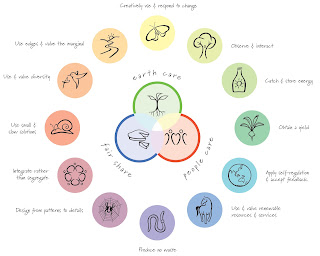
Permaculture is a philosophy of working with, rather than against nature, of extended and thoughtful observation rather than extended and thoughtless labour; and of looking at plants and animals in all their function, rather than treating any area as a single product system. - Bill Mollison

Food Forest Installation - Permaculture In Action Series

In the workshop lead by Gabriel Pliska, we learned that a Food Forest is built to emulate a real forest, only we fill it with the food plants and trees that we want. There are seven layers to a food forest: 1) Canopy: large fruit trees and nut trees 2) Low tree layer: dwarf fruit trees 3) Shrub layer: currants and berries 4) Herbaceous layer: borage, lovage, comfrey 5) Rhizosphere : root vegetables 6) Ground cover: clover, strawberry, mushroom 7) Vertical layer: climbers and vines. If properly planned out, a permaculture food forest practically runs and maintains itself. Benefits include: a) habitat for local wildlife, pest control, pollination and wildlife viewing opportunities. b) Since permaculture food forests do not require chemical fertilizers or pesticides, they produce healthier foods and products. Products such as fibres, fuels, green manure, materials for crafts, food for domestic animals and can help reduce water usage in the garden.  C...
The Final Public Wood Burning Workshop!

Image
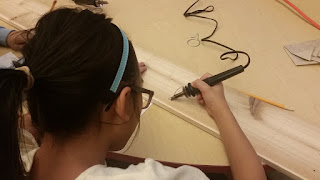
We had a nice workshop today and lots of drawing with the burning pens as well as finishing off the last panel for the standing boxes. Thank you to all of our committed workshop participants!

The Big Burn

Image
On November 14, the Killarney Community Centre Senior's Association got together to embellish the panels of the larger 8' x 4' ft planter boxes. Two dozen seniors used river stones to make their marks!

Out-of-School Care Kids Woodburning

Image
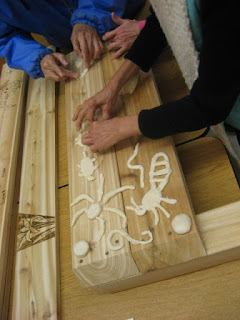
The kids enrolled in our licensed Out-Of-School care program also got involved in the process of embellishing the planter box panels. the younger ones used the salt-dough method, while the others used the wood burning tool. Here are a few works in progress.

Preschoolers Making Their Mark!

Image
The preschoolers learned about bugs and creatures that might live in gardens. Together, we made salt-dough critters, placed them on the wood,  toasted the wood with a blow-torch, then lifted  them to reveal their shadows. The results were beautiful shadows of creatures and river rocks. Pat Beaton introducing the activity.

Using Stones To Mask

Image
Another wood burning technique is to place objects, such as river stones, in patterns. We then burn the wood around the stones using a blow torch.